
Steel ball, also known
as steel ball or ball, is a spherical steel component widely used in
industry and daily life.
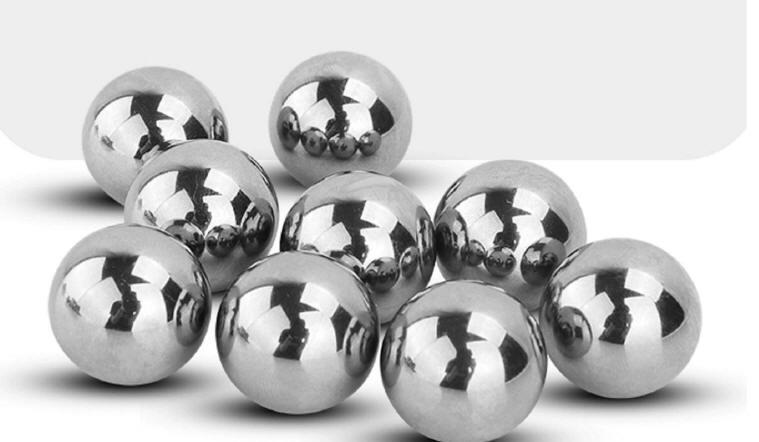
Based on their application fields and characteristics, steel balls can
be primarily classified into the following categories:
Wear-resistant steel balls (grinding balls): Primarily used in crushing
and grinding operations in industries such as mining, cement, power, and
chemical, they achieve material crushing through collision and friction
with the material. These steel balls require high wear resistance, and
common materials include high chromium steel, low chromium steel, 65Mn,
42CrMo, etc. 12 Bearing steel balls: The core component of precision
bearings, they are used to support and reduce friction of rotating
parts. These steel balls have extremely high requirements for precision,
roundness, and surface finish, commonly known as "steel balls" or
"rolling balls". 1 Stainless steel balls: Made of stainless steel with a
chromium content of ≥12.5%, the chromium oxide layer formed on the
surface provides excellent resistance to atmospheric corrosion, water
vapor, water, and acid-base-salt corrosion. According to alloy
composition and performance, they are mainly divided into: Austenitic
types: Such as 304, 304HC, 316, 316L, which are non-magnetic or weakly
magnetic, with excellent rust and corrosion resistance, commonly used in
medical equipment, food machinery, chemical industry, aviation, and
other fields. 3 Martensitic types: Such as 420, 440C, which are
magnetic, with high hardness (HRC up to 58 or more), good wear
resistance, suitable for high-precision bearings, valves, petroleum
machinery, etc. 3 Other types: Such as 201, 302, etc., also belong to
the austenitic type, with different performance and cost
characteristics, suitable for general hardware accessories, household
appliances, etc. 3 Micro steel balls: Specifically designed for micro
bearings, their roundness, surface roughness, and other precision
indicators directly affect the performance of the bearing. The nominal
diameter is usually between 0.5mm and 12.7mm, with core specifications
concentrated between 0.8mm and 2.381mm, and precision grades up to G3,
G5, G10